I should not be here.
There are critical simulations running on three decks. Fold stress projections that require my authorization. Enemy movement patterns that will not decode themselves.
A war council convenes in two hours where I will be expected to justify decisions that should require no justification.
And yet.
I stand in Bay Seven, reaching for a fruit my body cannot digest.
Because Bay Seven is sealed. Access restricted to Admiral-level clearance and a single trusted attendant who has learned not to ask questions. No other being has ever set foot here. No human knows it exists.
The guava tree stands ten feet tall now, branches spreading in patterns I have memorized over fifteen cycles. I know which limbs bear fruit first, which require support, where the bark has scarred and healed from my clumsy early attempts at cultivation.
I, who have never kept anything soft, have kept this.
The seed came from a single fruit. Kept in stasis for three years before I understood what I was preserving.
Fifteen cycles ago, when I was newly promoted—still bloodied from the Keth Suppression, still proving to High Command that youth did not equal incompetence, still learning that the greatest danger was not the enemy you faced but the weakness you allowed yourself to keep.
I planted it myself, against regulations, against efficiency protocols, against the cold algebra that governs every cubic meter of space on a warship designed to carry millions through the void.
I told no one. Requisitioned the bay under false pretenses. Diverted resources. Falsified agricultural reports.
Small treasons in service of something I could not name and refused to examine.
The branch bends under my hand. I adjust pressure by micrometers-too much force and the wood splits, too little and I accomplish nothing.
My species excels at calibrating violence. We are weapons that learned to think, predators that discovered logic, and we have spent ten thousand years pretending that makes us civilized.
It does not.
Civilization is a protocol we follow when it serves survival. When it does not, we discard it with the same efficiency we use to discard failing strategies, obsolete technologies, and species that cannot adapt fast enough to remain useful.
I am very good at discarding things.
I have discarded allies who became liabilities. Discarded mercy when it threatened mission parameters. Discarded the names and faces of those I have killed because memory is weight and weight slows you down.
Except her.
Except this.
It sits in my palm, warm from the artificial sun suspended above Bay Seven in a configuration I personally designed to match Earth's atmospheric conditions at 23 degrees latitude, the exact position of the settlement where I first encountered her.
For a moment, I am not Admiral Kriudra, War-Commander of the Zypherian fleet lamia.
I am sixteen.
Unblooded.
Still learning to calibrate the difference between efficiency and cruelty, though my instructors insisted there was none.
Standing in alien heat beneath a sky that is too blue to be real.
Earth.
The mission designation was OS-447: Observational Survey, Species Viability Assessment, Priority Level Minimal.
Translation: determine whether humanity was worth the fuel cost to save. Whether they might carry the genetic sequence we were searching for.
We are at war.
The First Architect—the only viable counter to the Xelathi—was not a weapon, but a distributed design, fragmented across sentient species. Each carrier held a piece of its activation code written into their biology.
Our mission: Identify. Catalogue.
Do not engage.
Observe them.
Map their genetic markers. Determine if they carry the sequence.
Do not let them see us.
And if they do—eliminate the witness.
First contact is not a trainee's decision to make.
We were ghosts then-present but unseen-moving through their cities, their markets, their fragile, ignorant lives.
Their gravity was crude, but functional. Their air was thick with dust and exhaust and the sour-sweet press of a thousand organic scents layered with no discipline, no separation.
Life upon life upon life, rotting and blooming in the same breath.
My attention should have been on the data-pad at my wrist, recording baseline human behavioral patterns in rural population centers.
Instead, it was dragged upward-by sound.
A human child—female, approximately ten solar cycles based on skeletal development and mass ratios—clung to a tree branch at a height that exceeds safe parameters for her species bone density and musculature. Her hands gripped bark that was already fracturing under load. Her feet dangled above packed earth and broken concrete.
She was reaching for something. Stretching.
The branch bent.
I calculated the failure before it happened. The tensile strength of bark, the load, the angle, the force of impact on an underdeveloped skeletal frame. My mind supplied the results in cold numbers.
The branch snapped.
I moved before the data finished rendering.
Fifteen meters.
2.3 seconds.
Cloak field rippling, cohesion threatened by speed, but I did not care.
I reached her as gravity did, arms extending.
She fell into me.
For a creature so small, the impact was... startling. Not in force, but in presence. Warmth. Noise.
The wild, hammering percussion of a single human heart trying to escape bone.
I absorbed the momentum, redistributed it through my stance, and held.
For a heartbeat, we were both suspended-no longer falling, not yet standing.
Her small hands curled into my uniform, fingers pressing against fabric designed to withstand plasma fire.
She looked up.
Her eyes were brown threaded with amber-too large for her face, pupils blown wide with shock. Human fear response: elevated cortisol, adrenaline spike, fight-or-flight cascade triggering.
Logicaly she should have screamed.
She did not.
"Are you... an Angel?"
The words came soft, awed, as if I were something sacred instead of something that had killed more efficiently than most natural disasters.
My neural implants supplied the meaning of the word.
Angel.
Myth.
Winged savior from primitive human theology.
Wrong.
I am the thing angels would be sent to kill if they existed.
She swallowed.
"Please, angel... don't tell Mama I was gonna fall. She'll be mad."
The plea was not for her life.
It was for secrecy.
As if the greatest danger she faced was parental disapproval, not the alien warrior who could snap her spine with a gesture.
I set her down.
Gently.
Too gently for a trainee who had been warned all his life that hesitation killed.
I released her the moment her feet found the ground, fingers aching from the effort of restraint.
She wobbled.
Regained balance.
Looked at me again, head tipping to one side the way smaller predators in our archives did when confronted with something they couldn't yet decide to flee or follow.
Wrong. Everything about her response was wrong.
Something pale and round lay in the dust where she had fallen.
She noticed it at the same time I did.
“Oh!” she said, kneeling quickly and picking it up with both hands, like she was afraid it might be hurt. “My guava.”
A guava.
My neural implants supplied the designation automatically: Psidium guajava. Earth-origin fruit. Nutritional value moderate for human biology. No nutritional value for Zypherian metabolism.
Its skin was scuffed, mottled where it had struck the earth, but intact.
She brushed it off against her shirt with small, quick motions that did nothing to change its structural integrity and everything to reveal how much it mattered to her.
Then she held it out to me.
"You saved me," she said simply. "So this is yours."
Cause and effect. Debt and balance.
The math was simple. Absolute. Beautiful in its clarity.
The translator at my throat hummed, trying to map her tone.
There are protocols for first contact. Do not engage. Do not accept gifts. Do not become part of the narrative.
"I do not require—"
I began, voice too harsh, modulated for command frequencies, not conversation with children.
Her brows drew together.
For a fleeting moment, her lower lip trembled, as if refusal was far more terrifying than my height, my eyes, my claws.
"It's the best one," she insisted, pushing it closer. Tiny fingers, nails bitten ragged, knuckles scraped from climbing. "I climbed all the way up for it. You saved me. You should have it."
The fruit radiated warmth-from the sun, from her hands.
I curled my claws inward, forcing them to blunt, to fold, to become something that could touch softness without tearing it open.
Instinct whispered that if I refused, I would be rejecting more than food. Some primitive exchange was in progress, and I... did not want to break it.
Slowly, I took it.
Her face changed.
A smile-small, almost shy-broke over her features, as if some internal equation had balanced at last.
"There," she said, satisfaction softening her voice. "Now it's okay."
Now it's balanced. Now the universe makes sense again.
She should have run. Back to safety. Back to a species that did not yet know they were being evaluated for extinction or salvation.
Instead, she peered up at me again.
"My mom says the sweetest ones are at the top," she confided, glancing back at the tree. "That's why I went. She yells when I climb too high."
She laughed. A quick, breathy sound that made no tactical sense and yet lodged itself somewhere under my sternum like shrapnel.
"Beta! Where are you?"
A voice called from the distance—adult, female, worried.
The child's eyes widened.
"Oh! Mom is coming. Wait—"
She turned back to me, suddenly urgent.
"Don't go yet!"
But I was already stepping back, cloaking field re-engaging, rendering me invisible to human perception.
"Bye, angel!" she called into empty air, waving at where I had been standing. "Thank you for catching me!"
Then she ran—bare feet slapping on packed earth, arms pumping as she streaked across the courtyard and vanished through a narrow doorway into the crumbling building beyond, calling "I'm here, Mama! I'm okay!"
The guava sat in my palm.
Soft.
Warm.
Useless to my biology.
I should have discarded it. Logged the interaction. Wiped the deviation from my record.
Instead, I closed my hand around it with the same care she had used to pluck it from the dirt.
I carried it back to the ship.
I placed it in stasis.
And three years later, when I was promoted, when I had my own command, when I had proven myself ruthless enough to be trusted with power, I planted it.
The seed took root in artificial soil under artificial sun on a warship hurtling through the void toward wars that would kill millions.
It grew.
It has been growing ever since.
The memory releases me.
I stand in the bay I built from a lie, holding fruit from a tree I should never have planted, and I understand the pattern that has been running beneath every decision I have made since I met her.
She was ten then.
I did not know her designation then.
I know it now.
Ruby
The first time I met her on lamia,
I had been ready to kill her.
Crouched low, claws half-extended, the calculation already complete—another fragile human, another necessary erasure.
Then she looked at me.
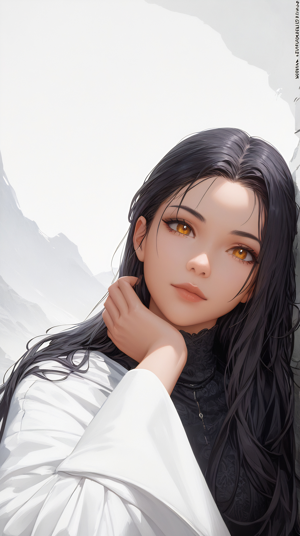
Brown eyes threaded with amber—too large for her face, wet with tears, pupils blown wide with terror and grief.
The same eyes.
My mind supplied an image that did not match the female in front of me.
Bare feet.
Scabbed knees.
A guava pressed into my hand with absolute conviction that this was how the universe should balance.
You saved me.
So this is yours.
She wasn’t scared. Wasn’t terrified. She didn’t look at me like I was the monster.
That was the error.
Wrong.
Everything about this was wrong.
I should have corrected it. Eliminated the anomaly. Completed the protocol.
Instead, I raised one claw to my lips—silence, not comfort—and issued a single, low directive.
“Shhh.”
Ruby.
Level 3.
Low combat viability.
Chronic immune instability.
I broke three protocols. Triggered two audits I personally buried under classification layers that would require Sovereign-level clearance to access.
An Admiral does not justify his decisions.
Not to his officers.
Not to the council
Not to himself.
But it's a lie and the truth is simpler and more damning.
I have killed millions. Ordered the sterilization of six worlds. Watched colonies burn because the alternative was weakness.
I am the architect of the Keth Suppression, the Butcher of Outer Colonies, the Admiral who has never lost a strategic engagement because I do not allow sentiment to compromise tactical efficiency.
I am a weapon.
That is what I was born to be, trained to be, what I have become with such perfection that even my own species fears me.
And seventeen years ago, a child claimed me without knowing the cost.
I have been unable to classify this as anything except,
T'skiyla
My T'skiyla.
The ancient word surfaces unbidden—a Zypherian term with no English translation. Closest approximation: the one who claims your blood. The one who owns your choices. The one you would burn worlds to protect.
I select a second guava. A third. The attendant—an aging Zypherian who has tended this bay for twelve cycles and learned not to ask why the Admiral personally inspects fruit growth—steps forward with a container, hands careful, eyes averted.
"I will take them without stasis," I say. My voice is steady. Flat. I do not let it soften, do not let it betray the irrationality of what I am doing.
He nods, adjusting the packaging, leaving them unsealed, as requested.
She said my name today. On the Command Deck, her voice breaking around the syllables, unconscious and raw.
She doesn't know what it does to me. Doesn't understand that every time she speaks it, she's repeating a claim she made years ago without knowing.
I was hers before she knew what claiming meant.
I was hers before I understood what being claimed would cost.
She is the only illogical thing I have ever allowed myself to keep.
Outside this bay, I am Admiral Kriudra. Ruthless. Efficient. The weapon the Zypherian Empire sharpened until I could cut through worlds.
In here, I am something I have no name for.

Write a comment ...